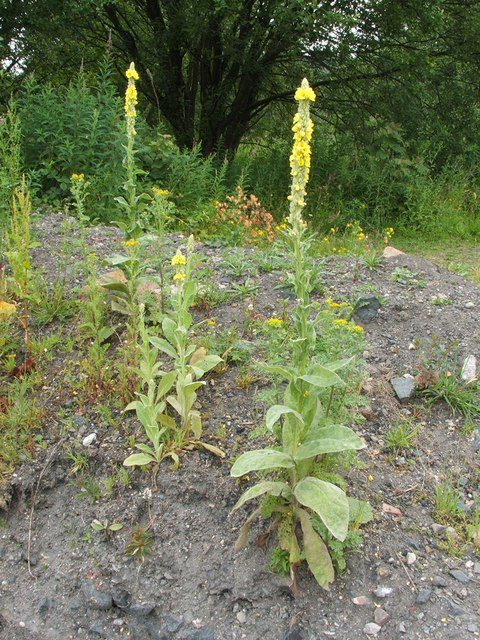
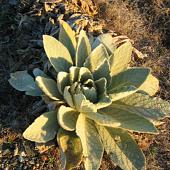
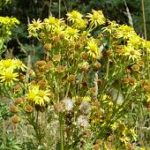
Verbascum thapsus L is native to Europe and Asia. A stout biennial herb with erect stems and large rosette leaves covered in thick silvery hair. Numerous yellow flowers form along a rod-like structure. A garden escapee which is still found in cottage gardens. Seeds are produced after flowering. Dispersal is by seed, dumped garden refuse, road machinery, slashing. Mullein invades roadsides, railway lines, waste areas, degraded agricultural land.
Manual control
Can be grubbed out making sure tap root is removed. Great mullein occupies sites with low soil fertility and does not persist when fertility is raised. Improvement of soil fertility and pasture improvement are the preferred control methods on grazing land. The plant is rarely eaten by livestock so is encouraged by heavy grazing.
From SGLN’s 2017 weed guide.
Herbicides must be applied at the appropriate rate as specified on the label and all safety precautions followed. If chemical control is necessary near drainage lines or streams, use extreme caution as the effects on aquatic life can be devastating even in minute amounts. Always seek expert advice.
Chemical control notes from SGLN’s 2017 weed guide
Spring when actively growing. Spray with Brush Off plus Pulse penetrant (off label*). Always check the herbicide label before use.
These notes are from 2017, and some information, particularly herbicide information, may be out of date. Please ask local suppliers and do your own research in selecting herbicides if choosing chemical control.
Family, origin, type, plant instead, control methods and the note above are from SGLN’s pocket guide Common weeds of South Gippsland (2026).