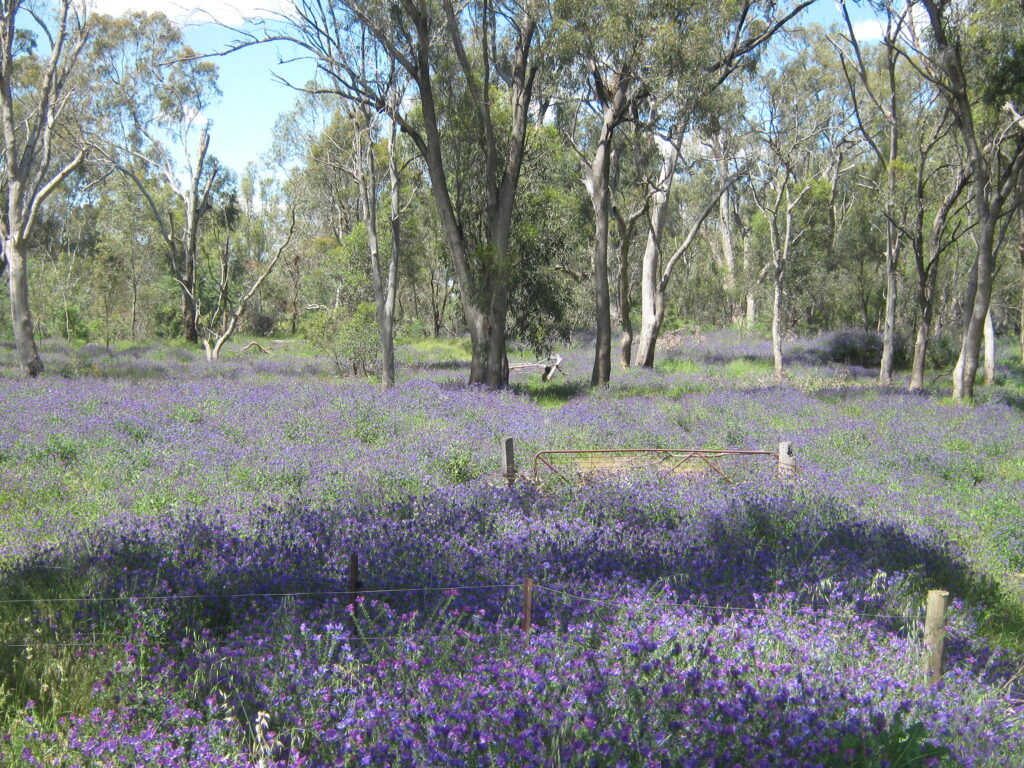

Echium plantagineum also known as Salvation Jane is native to Europe. It is a major agricultural weed. An erect many- branched, hairy annual usually to 1.2m high. Leaves to 30 cm long are oval or oblong with distinctive heart-shaped bases. Flowers are puplish to blueish. Can be poisonous to horses. A prolific seeder with four nutlets surrounded by a persistant stiff calyx. Dispersal is by seed, spread by contaminated fodder, machinery, vehicles and animals. Seed viable over 5 years. Establishes large populations rapidly, especially on disturbed ground. Competes with pasture and establishes on the edge of bushland. Infestations of Paterson’s Curse are often recognizable from a distance in grazing land, as they colour whole fields and hills purple. A priority weed through Gippsland.
Manual control
Plants can be removed by hand pulling or mattocking. Care must be taken to remove the taproot. Uprooted plants do not re-root, so can be left in the field. Aerial stems develop in the spring, and if they are present and have flowers or seeds on them they should be removed and burned or disposed of (immature seeds may be able to develop on the cut stems). Careful grazing management can help with Paterson’s Curse control — contact DELWP for more information
From SGLN’s 2017 weed guide.