Climbers & creepers

All 11 climbers & creepers
Weed profile

Ivy – Cape

Delairea odorata

Also called Cape Ivy

Family
Asteraceae
Origin
South Africa
Type
ENVEnvironmental weed
Plant instead Small-leaved Clematis Clematis microphylla
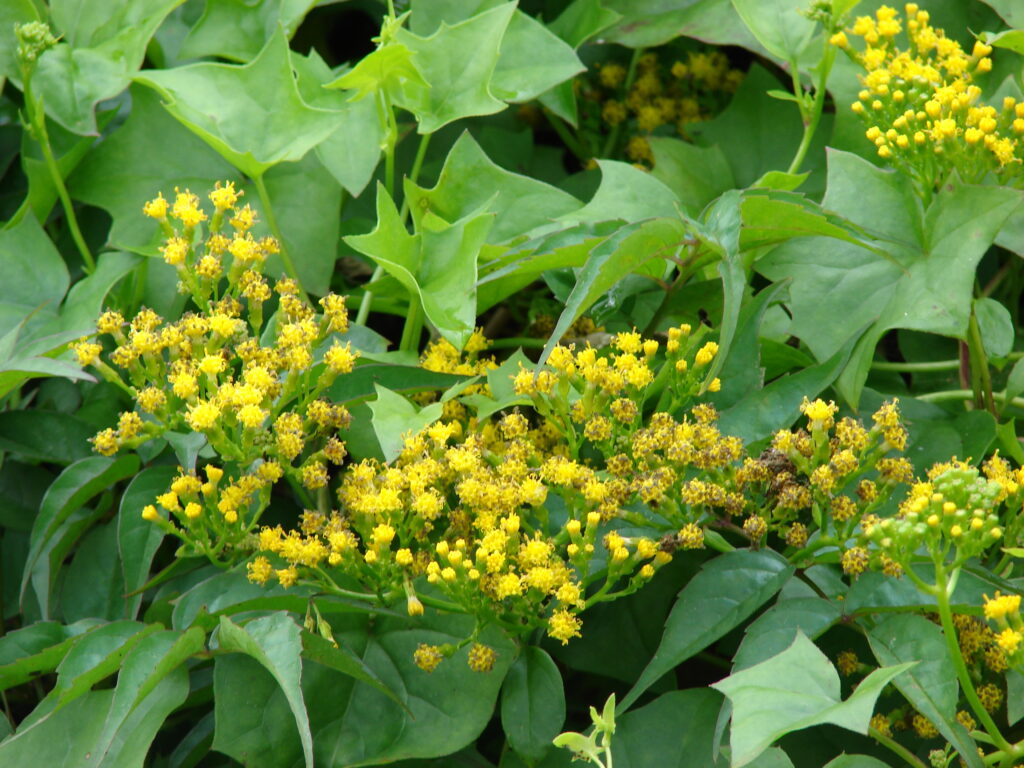
Ivy – Cape growing Ivy – Cape, close up
Photos from SGLN’s 2017 weed guide

About Ivy – Cape

Delairea odorata is a perennial climber with stems that reach up to 10m. Fleshy, lush, green, ivy-shaped leaf with 5-7 lobes. Leaves are arranged singly on alternate sides of the stem and are variable in size. Leaves are often shiny. Flowers are conspicuous clusters of small, unpleasantly scented yellow, daisy-like flower heads. July – September. The seeds are tiny with a crown of hairs which drop off after the seed has dispersed. Cape Ivy forms a thick mat on the ground layer, smothering out native plants. Used as a screen and on fences, it quickly climbs up trees and overtakes the garden and bush. Spreads by climbing over other plants.

• Seeds are spread by birds, wind, water, soil and dumped garden waste

• Cut stems will re-grow when conditions are suitable

• Plant fragments will grow into new plants

• Not widely available in nurseries but common at markets

Manual control

Start with vines growing up trees to prevent flowering and further spread by seed. Cut climbing stems with secateurs and leave to die in shrubs or trees. Gently hand pull or dig up stem runners. Follow the long runners to their source, carefully removing these and forking out main roots.

From SGLN’s 2017 weed guide.
Herbicides must be applied at the appropriate rate as specified on the label and all safety precautions followed. If chemical control is necessary near drainage lines or streams, use extreme caution as the effects on aquatic life can be devastating even in minute amounts. Always seek expert advice.
Chemical control notes from SGLN’s 2017 weed guide

Cut stem and paint with a suitable herbicide any stump that is to be left in the soil. Spray from June to September using Lontrel which is the effective registered chemical. Be careful not to spray native vegetation. Always check the herbicide label before use.

These notes are from 2017, and some information, particularly herbicide information, may be out of date. Please ask local suppliers and do your own research in selecting herbicides if choosing chemical control.

Family, origin, type, plant instead, control methods and the note above are from SGLN’s pocket guide Common weeds of South Gippsland (2026).