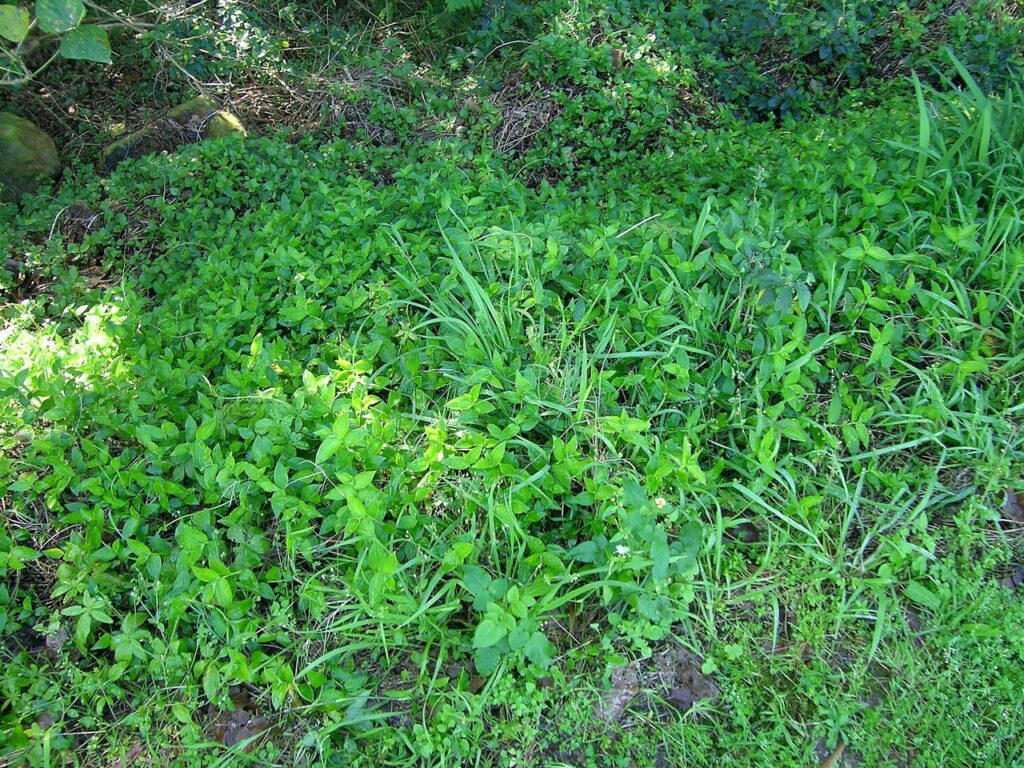
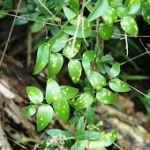
Tradescantia fluminensis is a rampant, smothering creeper with shiny dark green leaves and small white flowers spring-summer. Glossy leaves are arranged alternating along long stems. Leaves are stem clasping at the base. Flowers are white, about 1cm across, with a tuft of yellow tipped stamens. Fruit is not formed. Reproduces by stolons which produce roots on contact with the ground. Nodes readily take root if in contact with moist soil. Tends to proliferate along waterways as plant fragments move downstream. Often initiated from dumping of garden rubbish. Invades moist shaded positions along waterways and roadsides.
Manual control
Hand weeding to carefully remove the whole plant including the roots and nodes is effective but labour intensive. Removed material needs to be disposed of appropriately.
From SGLN’s 2017 weed guide.
Herbicides must be applied at the appropriate rate as specified on the label and all safety precautions followed. If chemical control is necessary near drainage lines or streams, use extreme caution as the effects on aquatic life can be devastating even in minute amounts. Always seek expert advice.
Chemical control notes from SGLN’s 2017 weed guide
There are a number of herbicides registered for use in Victoria. STARANE 200 HERBICIDE or TORDON 75-D are just two examples. Repeat treatments will be needed. Surfactants will improve penetration into the waxy-coated leaves. Keep in mind that there are restrictions on the use of herbicide in watercourses. Always check the herbicide label before use.
These notes are from 2017, and some information, particularly herbicide information, may be out of date. Please ask local suppliers and do your own research in selecting herbicides if choosing chemical control.
Family, origin, type, plant instead, control methods and the note above are from SGLN’s pocket guide Common weeds of South Gippsland (2026).