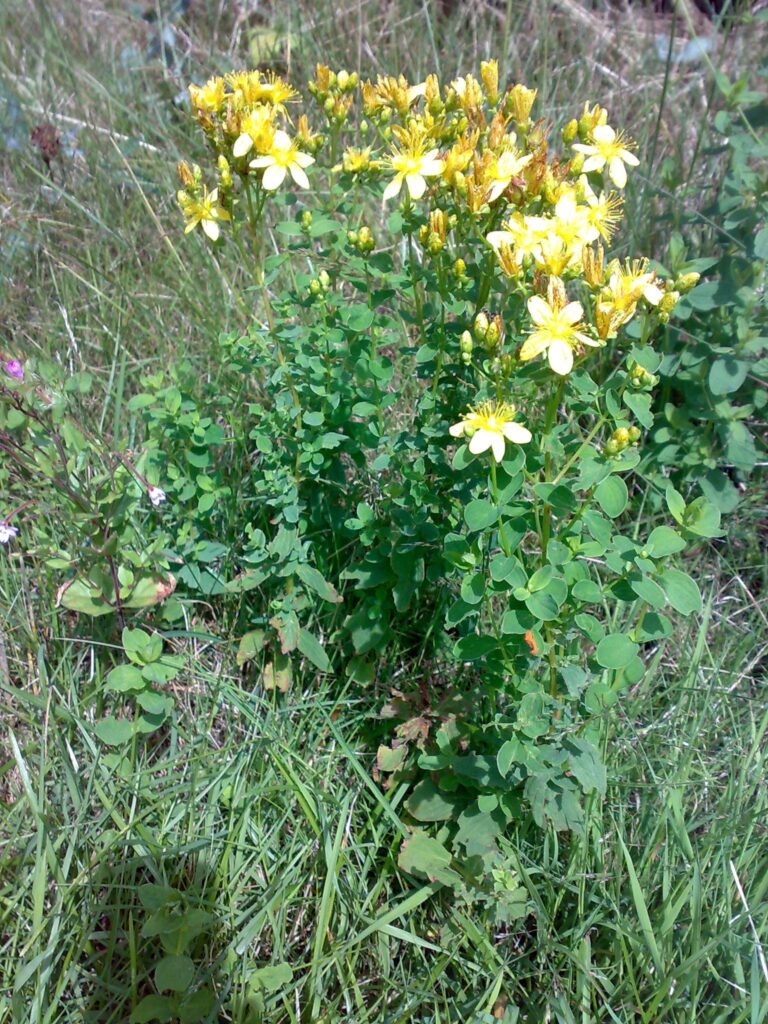
Generally avoided by grazing animals unless food is scarce, can cause death to stock if ingested. May be confused with native H.gramineum & H. japonicum.
Photos from SGLN’s 2017 weed guide
About St Johns Wort
Hypericum perforatum is a perennial herb to 1 m with numerous rust colored branches. Yellow flowers in spring-summer which have five petals with black dots along the margins. Toxic to stock if eaten. Seeds golden brown, pitted in sticky capsules. Dispersal is by seed or runners, spread by animals, wind, slashing, or road machinery. Invades sandy or gravelly soils along roadsides, railway lines and degraded agricultural land.
Manual control
Isolated plants or small infestations: Ensure that you have correctly identified the plant before removal. Physical removal is the best option where isolated plants are found on roadsides or in forest openings. They should be removed manually, preferably before they have seeded as they can become the source of much larger infestations. As much of the rootstock as possible should be removed to prevent re-sprouting and treated sites should be revisited regularly to ensure that there is no further germination or suckering.
From SGLN’s 2017 weed guide.
Herbicides must be applied at the appropriate rate as specified on the label and all safety precautions followed. If chemical control is necessary near drainage lines or streams, use extreme caution as the effects on aquatic life can be devastating even in minute amounts. Always seek expert advice.
Chemical control notes from SGLN’s 2017 weed guide
Larger infestations: Small to large infestations can be treated with herbicide applied by spot-spraying or other suitable methods. As infestations become larger, a strategically staged approach for removal is advisable to ensure that treated areas are not reinfested. Chemicals: Grazon Extra. Starane 200. Tordon 75D. Always check the herbicide label before use.
These notes are from 2017, and some information, particularly herbicide information, may be out of date. Please ask local suppliers and do your own research in selecting herbicides if choosing chemical control.
Family, origin, type, plant instead, control methods and the note above are from SGLN’s pocket guide Common weeds of South Gippsland (2026).