Trees can be cut down or ringbarked without the need for herbicide use.
Photos from SGLN’s 2017 weed guide
About Pine
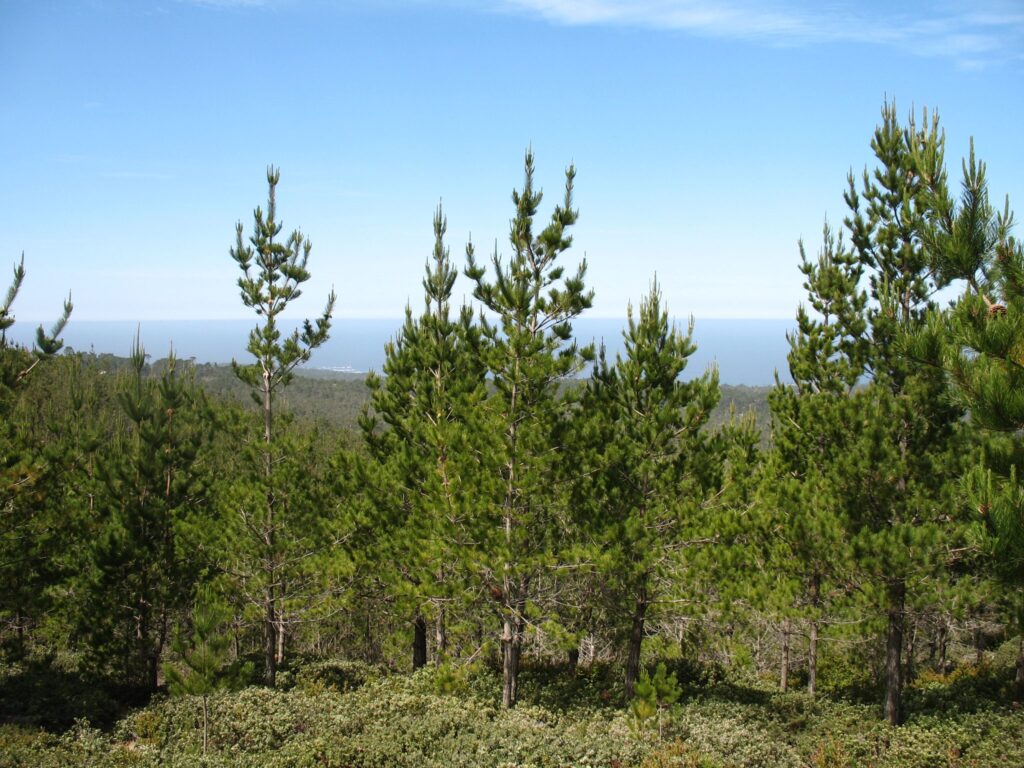
Pinus radiata is native to the northern hemisphere. A tall, evergreen softwood tree to 40 m. Dark green needle-like leaves in dense clusters. Large seed bearing cones are produced at the end of branches. Seed is dispersed by wind and birds. Pines reduce soil fertility, produce a dense leaf litter and shade out other species.
Manual control
Hand remove small plants. For larger plants, cut off close to the base. Collect and burn all seed cones. Be aware of fire restrictions. Seedlings can be slashed to ground level.
From SGLN’s 2017 weed guide.
Herbicides must be applied at the appropriate rate as specified on the label and all safety precautions followed. If chemical control is necessary near drainage lines or streams, use extreme caution as the effects on aquatic life can be devastating even in minute amounts. Always seek expert advice.
Chemical control notes from SGLN’s 2017 weed guide
Larger plants can be treated with the drill and fill method using Round Up. Always check the herbicide label before use. Mature plants may need specialist abourists to assist with felling next to infrastructure.
These notes are from 2017, and some information, particularly herbicide information, may be out of date. Please ask local suppliers and do your own research in selecting herbicides if choosing chemical control.
Family, origin, type, plant instead, control methods and the note above are from SGLN’s pocket guide Common weeds of South Gippsland (2026).