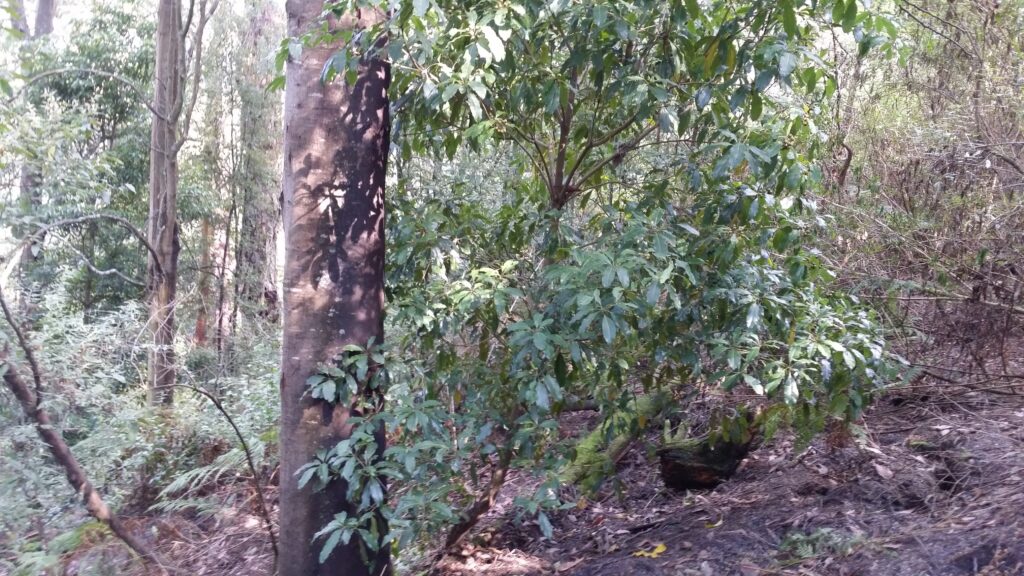
Has spread beyond its natural range through use as a garden and street plant. It has also become a weed in its natural habitat due to altered fire regimes since European settlement.
Photos from SGLN’s 2017 weed guide
About Sweet Pittosporum
Pittosporum undulatum occurs naturally throughout much of Gippsland. Masses of sweet scented flowers in spring which develop in to orange berries in autumn. Has become very invasive along roadsides and bushland out competing other natives. Becoming more widespread due to altered drainage patterns, reduced fire frequencies and increased dispersal by birds. Westward distribution due to popularity as a garden plant. Sweet pittosporum has dense foliage which reduces light levels which effects the composition of ground flora and leaf litter altering soil chemistry.
Manual control
Small plants can be hand pulled. Larger plants can be mechanically removed with a woody weed puller.
From SGLN’s 2017 weed guide.
Herbicides must be applied at the appropriate rate as specified on the label and all safety precautions followed. If chemical control is necessary near drainage lines or streams, use extreme caution as the effects on aquatic life can be devastating even in minute amounts. Always seek expert advice.
Chemical control notes from SGLN’s 2017 weed guide
Cut and paint with Round Up or Vigilant Gel. Frill and fill with Round up. Always check the herbicide label before use.
These notes are from 2017, and some information, particularly herbicide information, may be out of date. Please ask local suppliers and do your own research in selecting herbicides if choosing chemical control.
Family, origin, type, plant instead, control methods and the note above are from SGLN’s pocket guide Common weeds of South Gippsland (2026).