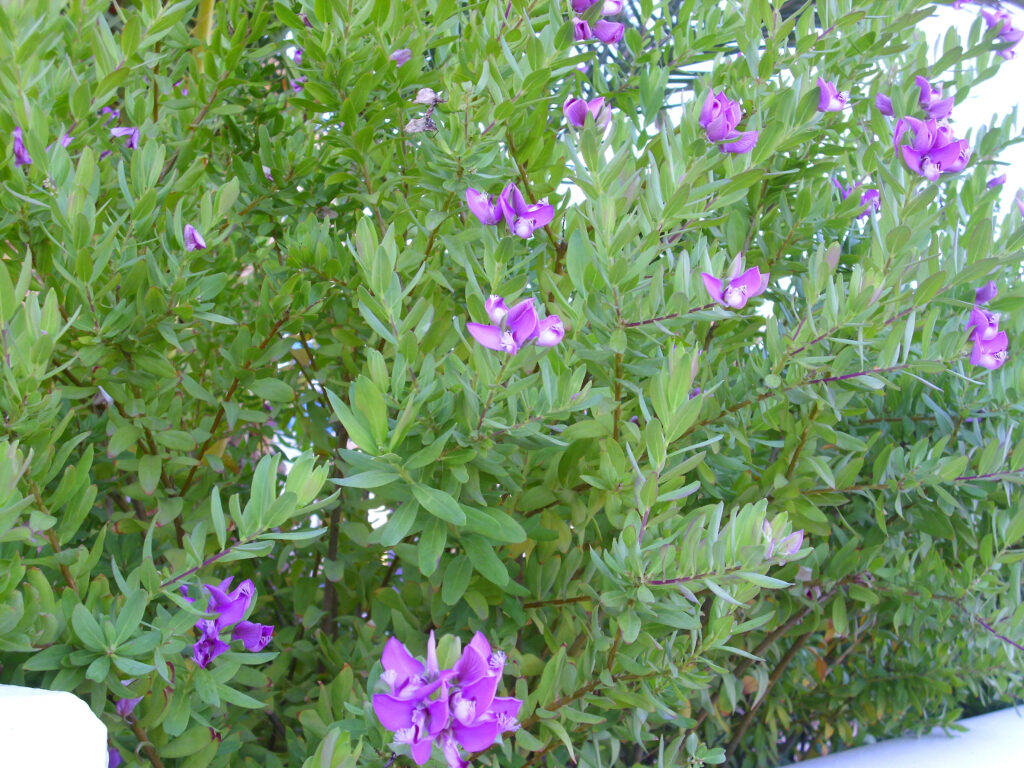
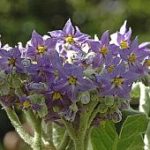
Polygala myrtifolia is native to South Africa. An erect spreading shrub to 3m high with leaves oblong to oval (1.5-4cm long). Flowers most of the year, especially during late winter to early spring. Fruits are hear t-shaped capsules containing 2 seeds. Seed is dispersed by birds, ants, water, in soil and in garden refuse. A highly invasive weed of coastal areas. Plants tolerate salty winds and will grow in sun and full shade forming dense thickets.
Manual control
Hand remove seedlings. For mature plants, cut off close to the base. Follow up control will be needed for at least three years while the seed remains viable. Plants are relatively sensitive to fire, so burning can be used to kill adult plants however fire will also cause mass germination of seedlings requiring intensive follow up.
From SGLN’s 2017 weed guide.
Herbicides must be applied at the appropriate rate as specified on the label and all safety precautions followed. If chemical control is necessary near drainage lines or streams, use extreme caution as the effects on aquatic life can be devastating even in minute amounts. Always seek expert advice.
Chemical control notes from SGLN’s 2017 weed guide
Larger plants can be treated with the cut and paint method using Round Up or Vigilant gel. Always check the herbicide label before use.
These notes are from 2017, and some information, particularly herbicide information, may be out of date. Please ask local suppliers and do your own research in selecting herbicides if choosing chemical control.
Family, origin, type, plant instead, control methods and the note above are from SGLN’s pocket guide Common weeds of South Gippsland (2026).