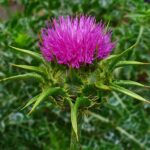
Cirsium vulgare is an erect biennial plant, 50 cm to 1 m high. Divided leaves with spiny lobes. Purple flowers in summer. Seeds with hairs attached produced after flowering. Dispersed by wind, water, vehicles and animals. Invades pastures and roadsides.
Manual control
Spear thistles can be successfully chipped out with a hoe when they are mature and they shouldn’t grow back. When they are young, unless the tap root is not removed they can regrow. If chipped out when flowering and left in paddock it will still seed and further contaminate pasture.
From SGLN’s 2017 weed guide.
Herbicides must be applied at the appropriate rate as specified on the label and all safety precautions followed. If chemical control is necessary near drainage lines or streams, use extreme caution as the effects on aquatic life can be devastating even in minute amounts. Always seek expert advice.
Chemical control notes from SGLN’s 2017 weed guide
There are various chemicals available to foliar spray, most common are Amicide 625, Kamba M and Lontrel. Best time to spray -Boom spray in Autumn or Spring while plants are seedlings with a selective registered herbicide such as Amicide 625. Spot spray spring to summer. When mature a stronger chemical is neccesary such as Kamba M or Lontrel. Always check the herbicide label before use.
These notes are from 2017, and some information, particularly herbicide information, may be out of date. Please ask local suppliers and do your own research in selecting herbicides if choosing chemical control.
Family, origin, type, plant instead, control methods and the note above are from SGLN’s pocket guide Common weeds of South Gippsland (2026).