
Herbs, succulents, bulbs & orchids

All 34 herbs, succulents, bulbs & orchids
Weed profile

Angled onion

Allium triquetrum

Family
Amaryllidaceae
Origin
Mediterranean
Type
RRestricted weed
Plant instead Tall sedge Carex appressa

Can taint milk and meat when consumed by grazing animals.

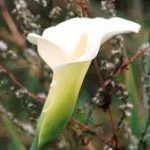
Angled onion growing Angled onion, close up
Photos from SGLN’s 2017 weed guide

About Angled onion

Allium triquetrum has white, bell-like flowers in winter and spring; similar to snowdrop but with a strong onion smell. Fruit/Seeds in summer. Dispersal: Spreads mainly vegetatively from bulbs eg. through grading of roadsides. Invades: Water courses, roadsides, waste areas, coastal areas.

Manual control

Small Plants

Hand pull or use a garden fork ensuring removal of bulbs and adjoining corms and rhizomes.

Large Infestations

Remove flower heads prior to seed set, using either lawn mower or brush cutter.

Cover infested area with dense mulch matting (eg. Old carpet, thick newspaper), topped with appropriate mulch, after active growth, and leave to rot down.

Alternatively, cover with black plastic prior to seed set. Leave plants to ‘cook’ for several weeks or longer if possible before hand removing or spot spraying the weakened plants.

From SGLN’s 2017 weed guide.
Herbicides must be applied at the appropriate rate as specified on the label and all safety precautions followed. If chemical control is necessary near drainage lines or streams, use extreme caution as the effects on aquatic life can be devastating even in minute amounts. Always seek expert advice.
Chemical control notes from SGLN’s 2017 weed guide

Treat at the bulb exhaustion stage late winter to early spring as treatments outside this period do not provide the same degree of control. Use Brush Off and Pulse penetrant. (off label*). Do not spray near streams or waterways. Always check the herbicide label before use.

These notes are from 2017, and some information, particularly herbicide information, may be out of date. Please ask local suppliers and do your own research in selecting herbicides if choosing chemical control.

Family, origin, type, plant instead, control methods and the note above are from SGLN’s pocket guide Common weeds of South Gippsland (2026).