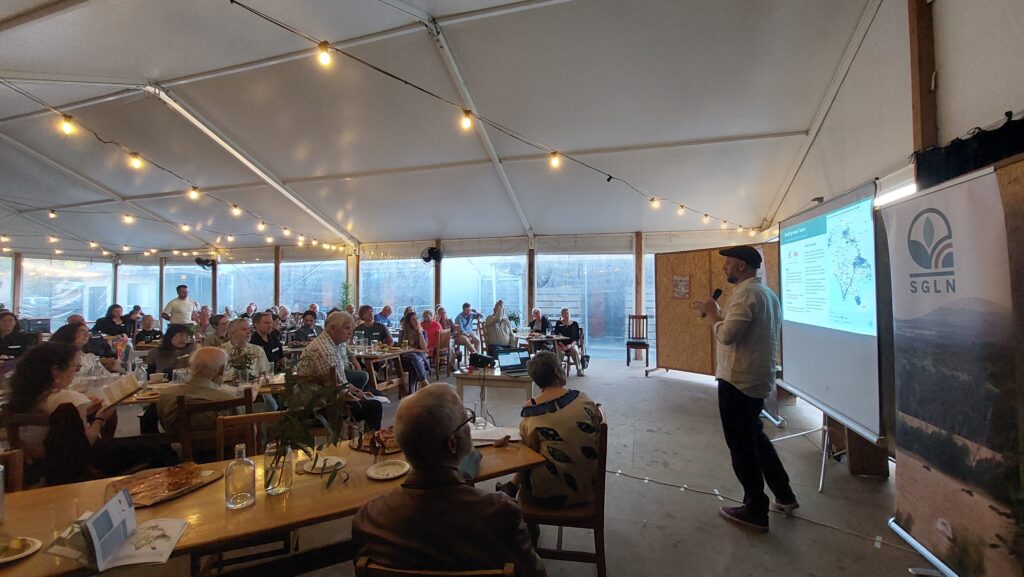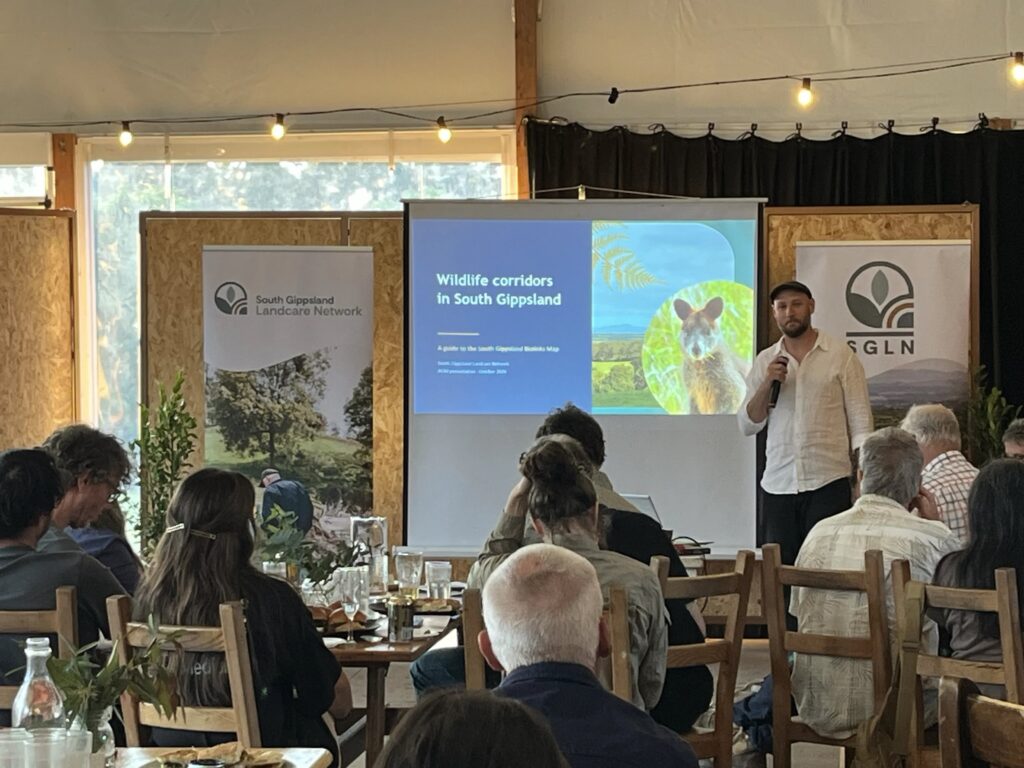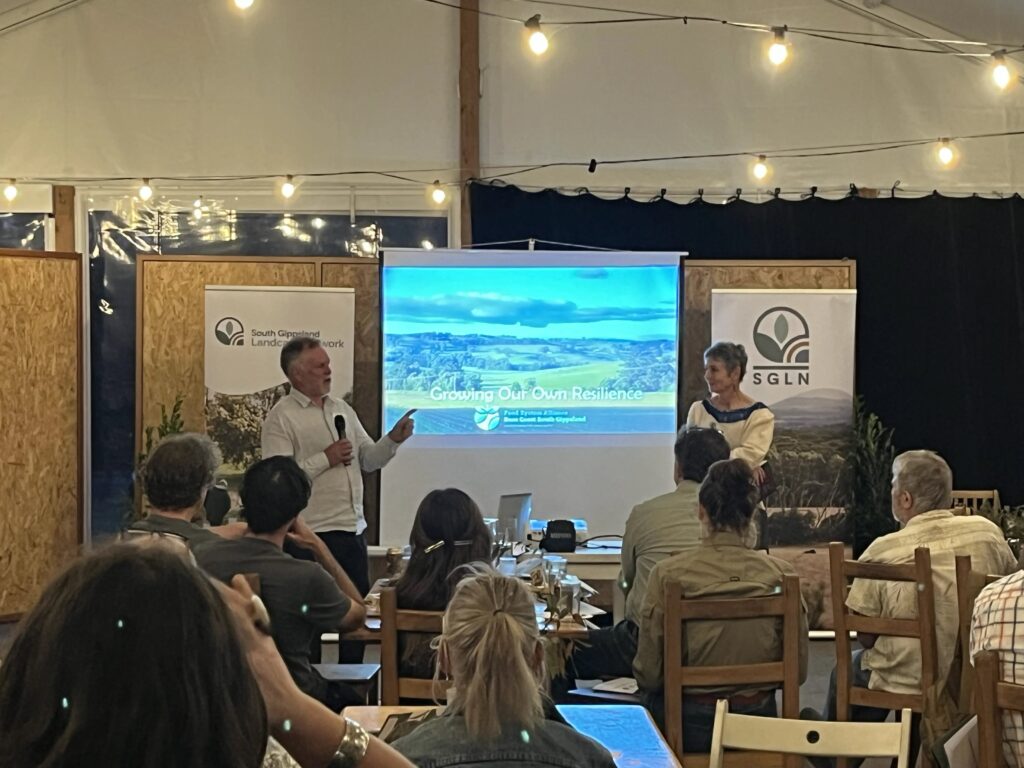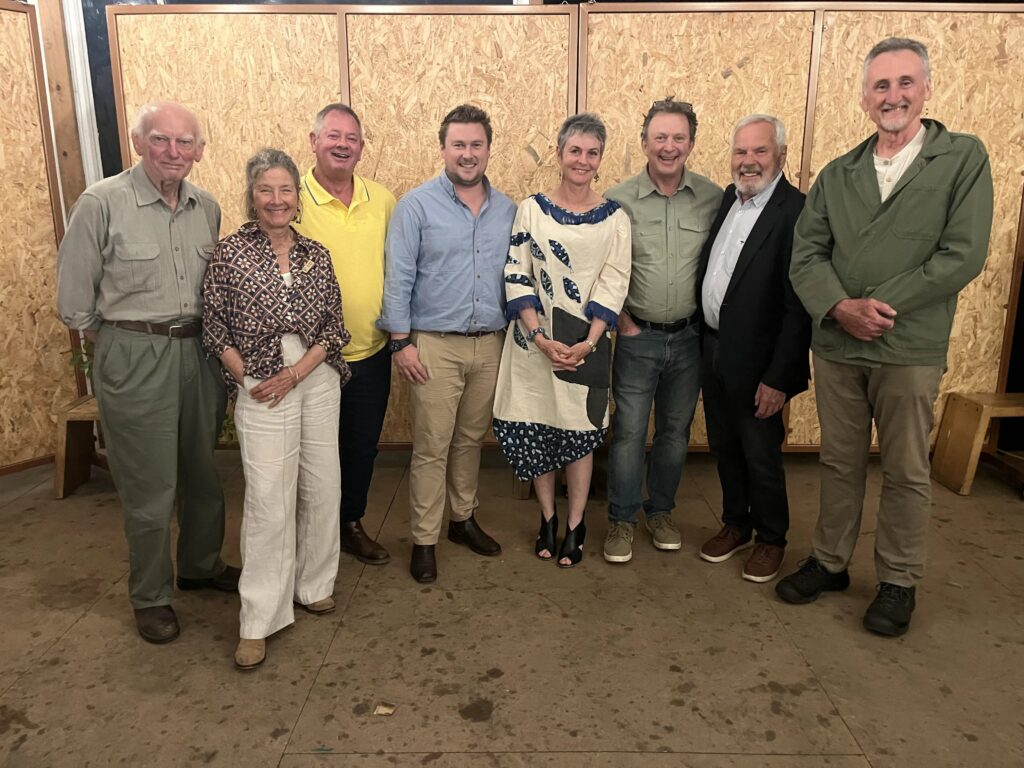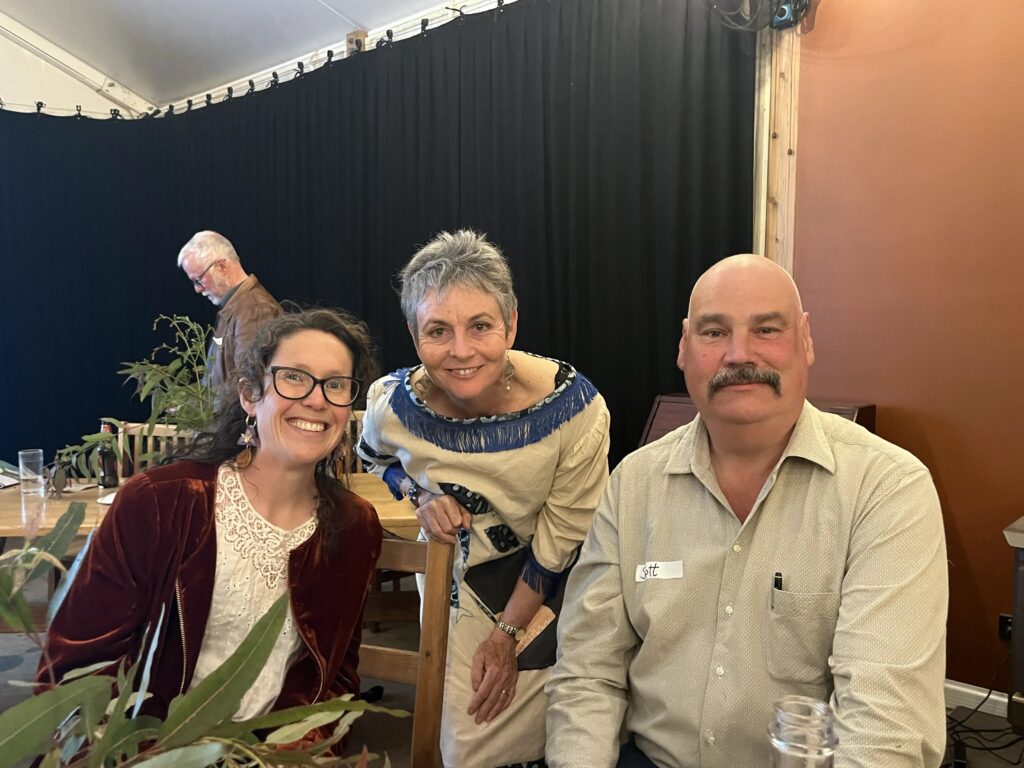
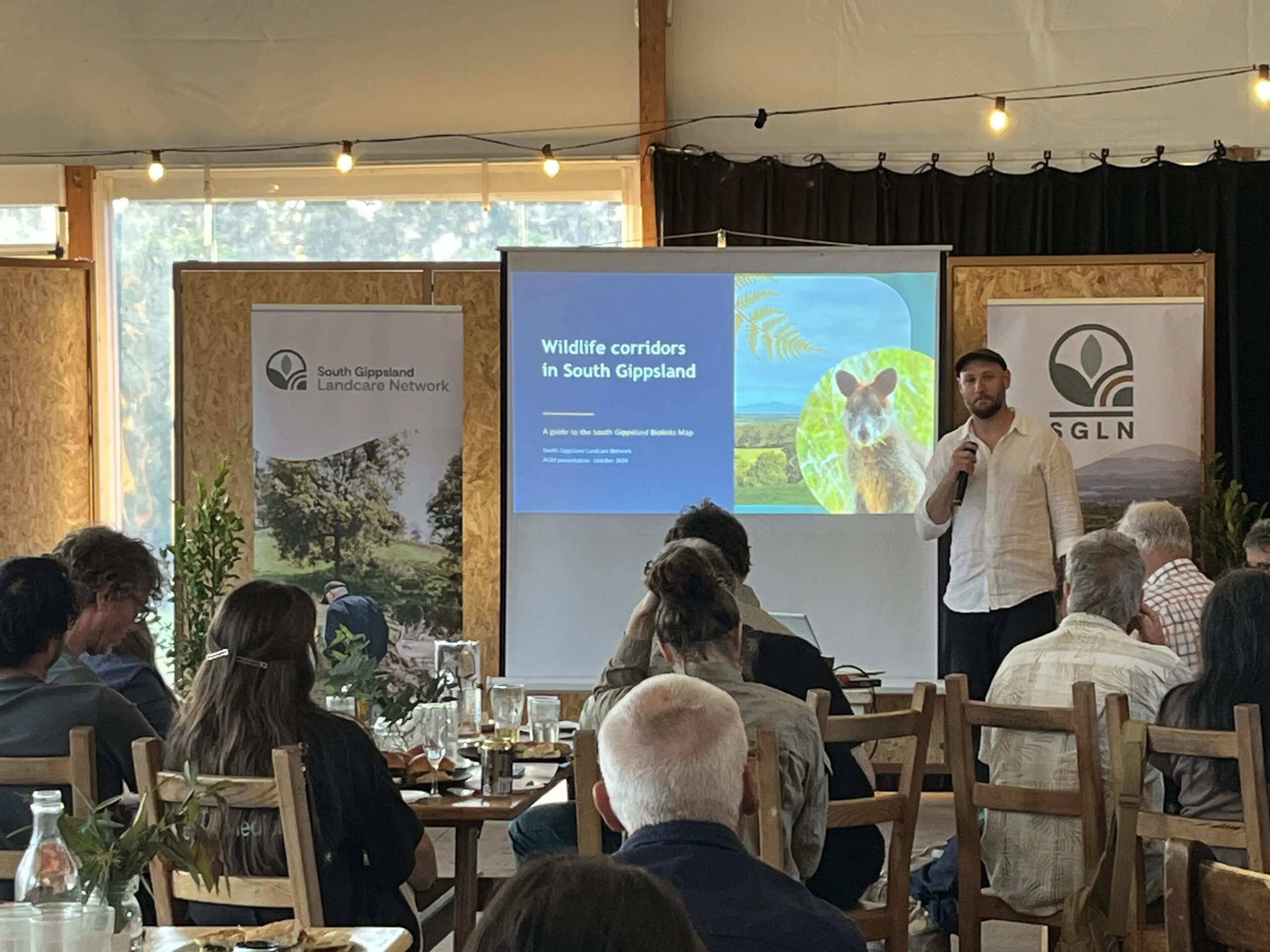
The South Gippsland Landcare Network (SGLN) launched its Biolinks Map for South Gippsland at its 2026 Annual General Meeting, held on 21 October at Trulli in Meeniyan. The evening also included the Chair’s address, the election of the board and a presentation by guest speaker Neil Barrett.
James Garden of Ecology Systems presented the Biolinks Map at the launch. Developed over two years, the map shows where wildlife can move through the region and where that movement is most limited. Only one fifth of South Gippsland’s original native vegetation remains, and much of it is scattered and isolated on private land. This leaves wildlife more vulnerable to fire, drought, disease and predators.
The project mapped more than 1,300 habitat patches and modelled how five groups of native animals move through the landscape. From this, it identified 16 wildlife corridors where on-ground action will make the greatest difference for the greatest number of species. Community knowledge shaped every stage, including more than 250 responses to an online map. For landholders, taking part is entirely voluntary. The map places no obligation on landholders and does not restrict what anyone may do with their property.
The Biolinks Map is a key action of the South Gippsland Biodiversity Protection Plan. It was made possible by generous donations from the Earthed Foundation, the Mirboo North and District Community Foundation, local Landcare Groups and private donors. The map and a downloadable brochure are available on the new Biolinks Map website at https://bpp.sgln.net.au/biolinks-map/.
In her address, SGLN Chair Jillian Staton reflected on a year of significant growth. “Gosh, what a year! More staff, more projects, more groups,” she said. “Our decision, made a few years ago, to focus on creating solid foundations for our three main pillars and then building on those foundations has really paid off.” The three pillars are sustainable agriculture, biodiversity and community.
The Network welcomed three new staff members over the year. Together, SGLN’s six staff supported 17 Landcare Groups and delivered a wide range of projects. Highlights included the multispecies coaching program, which is now entering its fourth year and has guided more than 50 farmers. A new Dairy Resilience project, run in partnership with Soils for Life, has also seen SGLN staff return to monitor the Tracy dairy farm demonstration site.
SGLN’s Memorandum of Understanding with the South Gippsland Shire Council won the Environment and Sustainability (Victoria and Tasmania) Award at the Parks and Leisure Australia Awards of Excellence. It is now in the running for the national award, which will be presented in December. The Network also welcomed two new member groups, the South Gippsland Seed Bank and the Gippsland Ground Crew.
“Knowing that there are so many people working to improve South Gippsland’s environment gives me hope for the future,” Ms Staton said.
Guest speaker Neil Barrett presented How Strong Landcare Roots Can Feed South Gippsland. Neil spent 48 years in the corporate world, including leading global sustainability initiatives such as food waste reduction targets in conjunction with the UN, FAO and WWF, before returning home to South Gippsland. He is now President of the Leongatha Community Market. He is championing the local food system initiative, The Commons Market in Leongatha, and is a steering committee member of the Bass Coast South Gippsland Food System Alliance. “Strong local food systems, as with Landcare, start with passionate people on the ground, such as those here tonight,” he said.
Five board members were re-elected: Jillian Staton (Chair), Sam Stringer (Vice Chair), Peter Debreceny (Secretary), Luke Thornton (Treasurer) and Herb Wildes. They join continuing members Graeme Ross, Jen Layton, Declan McDonald and Jim Forbes.